Peugeot Partner and Rifter WAVs: What You Need to Know Before You Buy
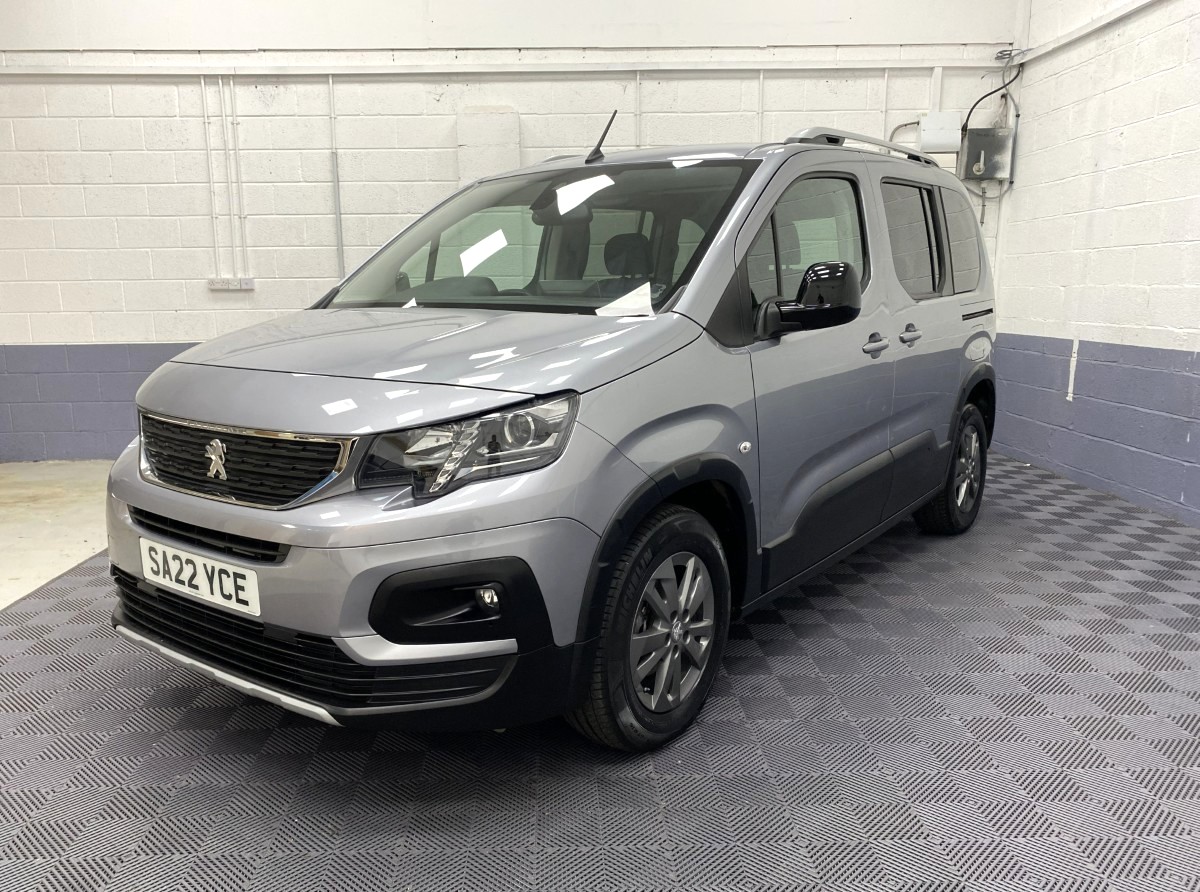
If you’re looking for a wheelchair accessible vehicle, you’ll quickly come across the Peugeot Partner and Peugeot Rifter. Both have become common choices for wheelchair users, families and carers who want a practical WAV that’s easy to live with every day.
At Michael Harraway Cars, I regularly sell Peugeot Partner and Rifter WAVs, and I see first-hand why they appeal to so many buyers. They offer a useful combination of manageable size, good interior space and straightforward rear wheelchair access. There are also different seating and conversion layouts available, so it’s worth looking beyond the make and model and thinking about how the vehicle will actually be used.
Why are Peugeot Partner and Rifter WAVs so popular?
One of the main advantages of the Partner and Rifter is that they’re relatively compact compared with some of the larger wheelchair accessible vehicles. For many people, there’s simply no need for a large van-based WAV. If the vehicle is mainly used for local journeys, appointments, shopping, family trips or carrying a wheelchair or mobility scooter, a smaller vehicle can be much easier to live with.
They’re also passenger-focused vehicles rather than large commercial vans, so they feel much more like a normal family car while still providing the extra space needed for wheelchair access.
Peugeot Partner or Peugeot Rifter?
The Partner and Rifter are closely related in terms of their practical purpose, but there are differences between them. The Partner is generally the older and more affordable option on the used market, which makes it particularly interesting for buyers looking for a straightforward WAV without spending more than necessary. The Rifter is the newer model and brings a more modern interior, newer equipment and a more contemporary passenger-car feel.
Which one is right for you depends on your budget, the age and specification you want, and, most importantly, how you intend to use the vehicle day to day. It’s worth looking at the actual vehicle rather than assuming the newer model will automatically be the better choice for your needs.
How many seats do you need?
This is one of the first things I recommend customers think about when choosing a particular vehicle.
A three-seat-plus-wheelchair layout is one of the most common types of WAV I sell, providing seating for the driver and two other passengers alongside the wheelchair user. For some families, that’s exactly what they need.
Other buyers prefer a WAV that can still be used much like a conventional five-seat car. Some Peugeot Partner and Rifter conversions retain the original rear seating and have a fold-flat ramp.
When the vehicle is being used as a five-seater, the rear seats are in their normal position and the ramp is folded flat, creating a conventional boot floor behind the seats. This means the vehicle can be used much like a standard five-seat car, with the wheelchair space hidden away.
When a wheelchair passenger needs to travel, the rear seats are folded up to create the wheelchair space and the ramp is folded out at the rear to provide access. Once the wheelchair is in position, it is secured using the wheelchair restraint system.
This can be a useful arrangement for families who don’t need to carry a wheelchair user on every journey, but still want the flexibility to do so when required. Think carefully about how many people will normally travel in the vehicle and whether you would actually use the flexibility of five seats. A three-seat-plus-wheelchair WAV may be all you need, while a five-seat WAV gives you more flexibility but will generally cost more.
Why rear wheelchair access works well for many people
Most of the Peugeot Partner and Rifter WAVs I sell have rear-entry access. The wheelchair user is normally positioned behind the front seats and secured using a four-point wheelchair restraint system: two restraints at the front and two at the rear of the wheelchair.
Many conversions also have an electric winch to assist with loading the wheelchair. This can be particularly useful if the person helping to load the wheelchair would find it difficult to push the wheelchair passenger up the ramp because of the incline. The winch helps to pull the wheelchair up the ramp and into position inside the vehicle.
The conversion also includes a lowered rear floor, which provides the additional headroom needed for the wheelchair user, while the ramp provides straightforward access.
A WAV can also be useful for carrying a mobility scooter
A wheelchair accessible vehicle isn’t necessarily only for someone travelling in a wheelchair. The open rear area and ramp can also make a WAV a practical way of transporting a mobility scooter. Instead of dismantling the scooter and lifting it into the boot of a conventional car, it can often be driven or pushed straight up the ramp and into the vehicle.
For some owners, this is actually the main reason for choosing a WAV. It avoids the need to lift a heavy scooter into a boot or use a separate scooter hoist.
Mobility scooters vary considerably in size, though, so always check the measurements of your particular scooter against the vehicle you’re considering.
Check the measurements before buying
This is one of the most important points when buying any used WAV. Don’t assume that because a vehicle is described as wheelchair accessible, your particular wheelchair will automatically fit. Wheelchairs and powered wheelchairs come in many different sizes, and width, length, height and weight can all make a difference.
Measurements can vary between conversions, even when the vehicles are the same model. Always check the ramp width, wheelchair area and entry height against your own wheelchair or mobility scooter before buying.
If you’re interested in a particular vehicle, I’m happy to provide the measurements before you travel to view it. If you’re unsure, give me the measurements of your wheelchair or mobility scooter and I can talk through whether a particular vehicle is likely to be suitable.
What should you look for when viewing a Peugeot WAV?
When viewing a used WAV, don’t concentrate solely on the mileage, age and specification of the Peugeot itself. The conversion is equally important. Take a good look at:
- The condition and operation of the ramp
- The wheelchair restraint system
- The operation of any electric winch
- The condition of the lowered floor
- The wheelchair entry height and available headroom
- The amount of space around the wheelchair
- The passenger seating arrangement
- Whether the wheelchair user can comfortably see and communicate with the other passengers
- Whether the vehicle suits the way you normally travel
If possible, bring the wheelchair or mobility scooter with you when you view a WAV and try it in the vehicle. If the wheelchair user is able to come with you, even better. Seeing how they get into the vehicle, how they are positioned and how easy the whole process feels in practice can tell you far more than a set of measurements on paper.
A WAV may look suitable from the measurements, but actually trying it will give you a much better idea of whether the layout works for you and the person who will be using it.
Things to consider when choosing a Peugeot WAV
Before choosing a particular Peugeot Partner or Rifter WAV, it’s worth thinking about how you will actually use the vehicle. There are various different seating layouts available, and what works well for one person may not be right for another.
It’s also worth thinking about whether the wheelchair user will remain seated in their wheelchair while travelling, or transfer to one of the vehicle’s seats. If they do transfer, it’s important to make sure they can comfortably get into one of the vehicle’s seats.
Other things to consider include:
- How many people will normally travel in the vehicle?
- Do you need three seats plus the wheelchair, or would a five-seat layout be more useful?
- Would you like the vehicle to be usable much like a standard family car when you’re not carrying a wheelchair?
- Can you comfortably operate the ramp? Try opening, lowering and folding the ramp yourself before buying, and make sure you are happy with the weight and movement of the ramp.
- Who will normally load the wheelchair, and would an electric winch make this easier?
- Will you use the vehicle in a Clean Air Zone? If you regularly travel into cities such as Bristol or Bath, check the vehicle’s emissions standard before buying. Many Clean Air Zones require diesel cars and vans to meet Euro 6 to avoid a charge.
Buying your first WAV?
For many people, buying a wheelchair accessible vehicle is something completely new, and it can feel confusing at first. There are different vehicle sizes, seating layouts, ramp systems and types of conversion to understand.
I’ve been specialising in used wheelchair accessible vehicles for around the last decade, alongside more than 30 years’ experience in the motor trade. I’ve sold more than 500 WAVs and speak to customers every week about the practical differences between the various layouts.
My advice is always to start with how you need the vehicle to work, rather than starting with a particular make or model. Once you understand what you need the vehicle to do, it’s much easier to narrow down the options that are likely to suit you.
Looking for a Peugeot WAV?
If you’re considering a Peugeot Partner or Rifter WAV, you can see my current used WAV stock on the website. Stock changes regularly, so if you have a particular requirement, it’s worth getting in touch before travelling.
Michael Harraway Cars is based in Weston-super-Mare, close to Junction 21 of the M5, making us convenient for customers from Bristol, Bath, Somerset, Devon and South Wales. All viewings are by appointment, giving you plenty of time to look around the vehicle and discuss whether the conversion is suitable for your needs.
If you’re unsure which type of WAV might suit you, call me on 01934 820077. I’m happy to talk through the different layouts and measurements before you make the journey