VW Caddy Maxi Wheelchair Accessible Vehicles: A Complete Guide
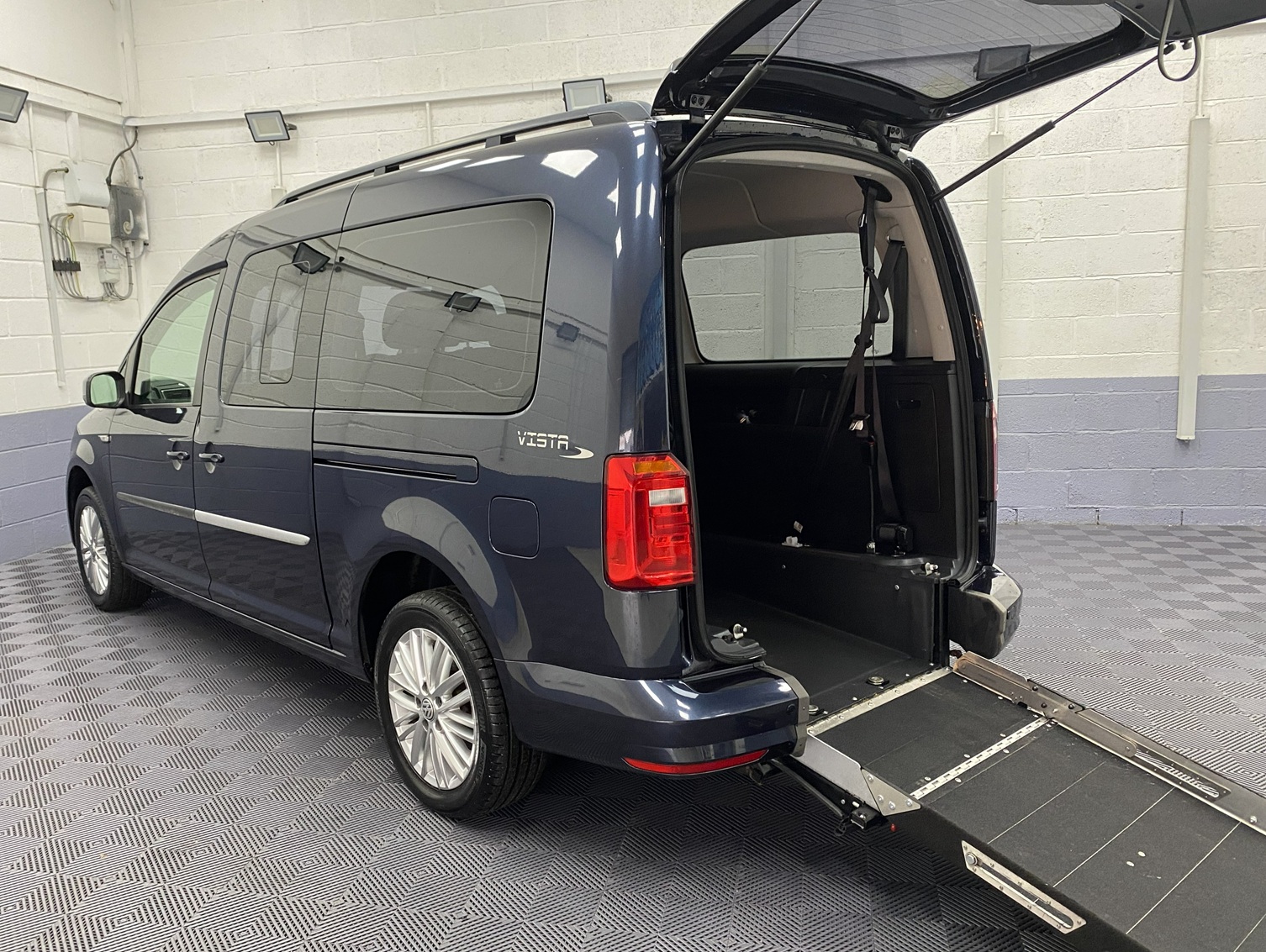
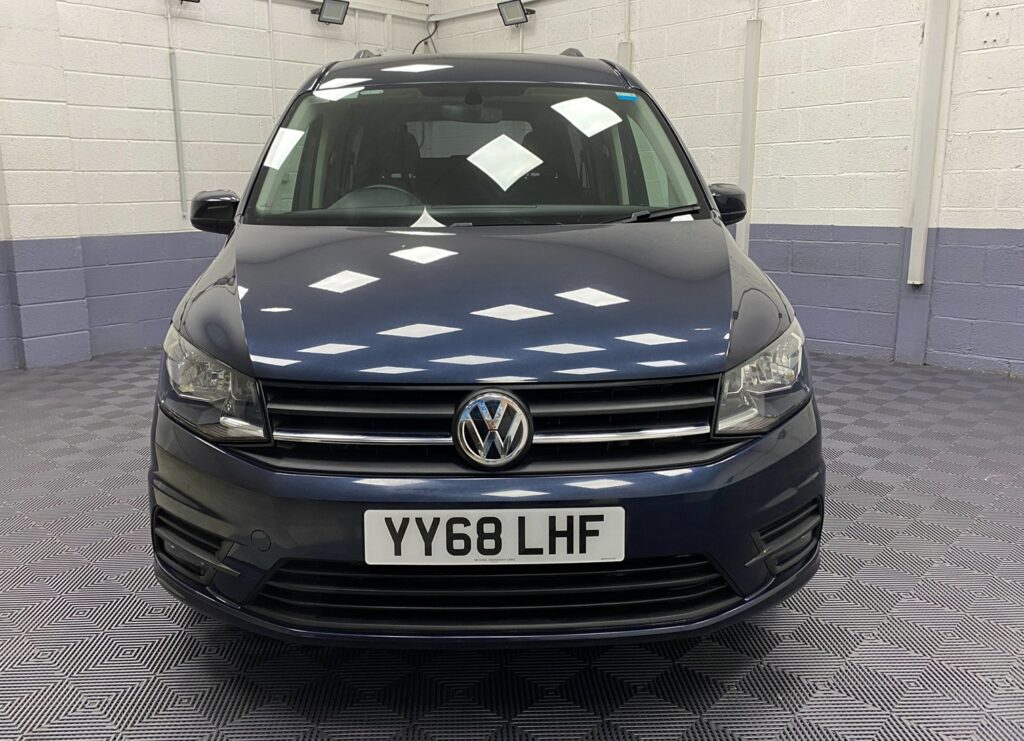
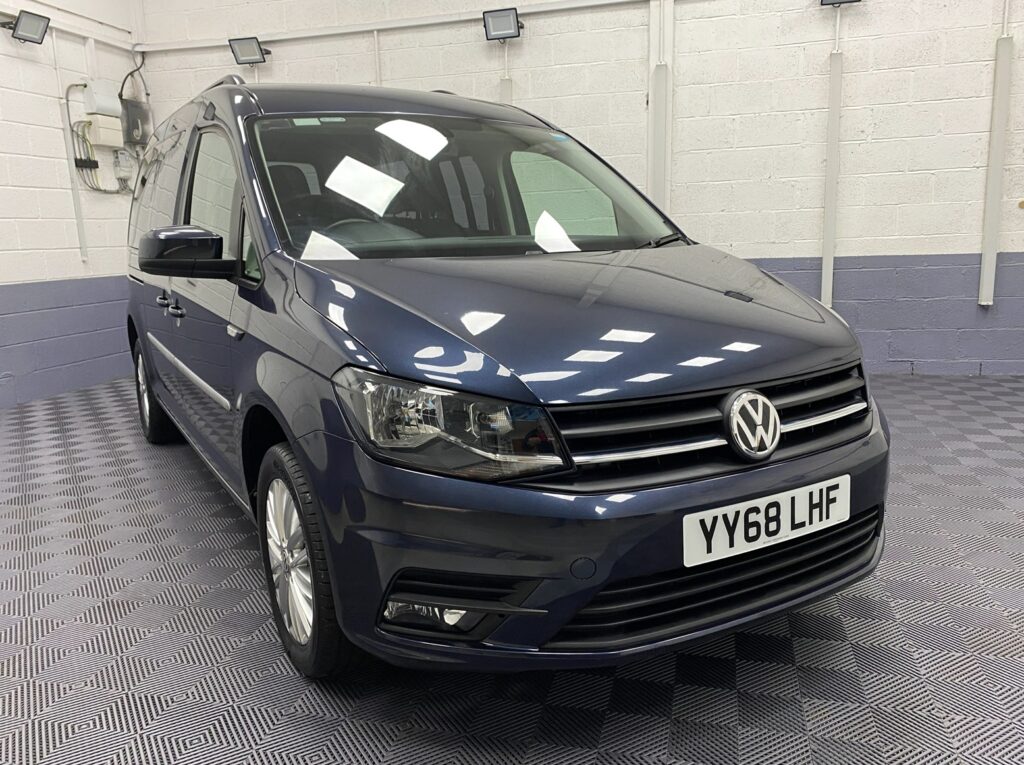
The Volkswagen Caddy Maxi has been a very popular choice for wheelchair accessible vehicle (WAV) conversions for many years. Its combination of a relatively compact exterior, generous interior length and practical passenger space makes it particularly useful for wheelchair users who need more room than a smaller WAV can provide.
This guide focuses on the previous-generation VW Caddy Maxi, which was replaced by an all-new Caddy in 2022. These older Caddy Maxi WAVs remain a popular choice on the used market and are available in a variety of different conversion layouts.
At Michael Harraway Cars, we regularly sell used VW Caddy Maxi WAVs and have seen first-hand why they continue to be popular. They offer a useful middle ground between smaller car-based WAVs and much larger van conversions, while still being relatively easy to drive and use on a day-to-day basis.
If you’re considering a used Caddy Maxi WAV, the most important thing to remember is that not all Caddy Maxi conversions are the same. The wheelchair area, seating arrangement, ramp design and available space can vary depending on which specialist company carried out the conversion.
Why is the VW Caddy Maxi so popular as a WAV?
One of the biggest advantages of the VW Caddy Maxi is that it offers a lot of useful interior space without becoming a particularly large vehicle to drive.
For many people, it sits in the ideal middle ground between a smaller car-based WAV and a much larger van-based WAV.
The four-seat Caddy Maxi conversion is particularly impressive for wheelchair space. Because there is no fifth seat in the centre of the rear, the lowered floor can extend a long way into the vehicle. The resulting wheelchair area can be similar in length to what you would find in some much larger van-based WAVs.
That means you don’t necessarily need to move into a large van simply because you need a long wheelchair area.
There is another advantage that is easy to overlook. The Caddy Maxi has a lower driving and passenger seating position than many larger van-based WAVs. If you’ve ever climbed into a large van, you’ll know that the extra height can make getting into the driver’s or front passenger’s seat feel more like climbing up than simply getting into a car.
For some people, particularly those who are used to driving a normal car, this makes a significant difference.
The Caddy Maxi also drives more like a car than a large van. It is still a practical commercial-vehicle-based vehicle, but its size and driving position can make it much less intimidating for someone who doesn’t want to spend their everyday life driving a great big van.
This combination of a relatively car-like driving experience, a lower seating position and the potential for a very long wheelchair area is one of the reasons the Caddy Maxi remains such a popular choice as a used WAV.
.
What is a VW Caddy Maxi WAV?
A Caddy Maxi WAV starts life as a standard Volkswagen Caddy Maxi. It is then converted by a specialist wheelchair accessible vehicle company.
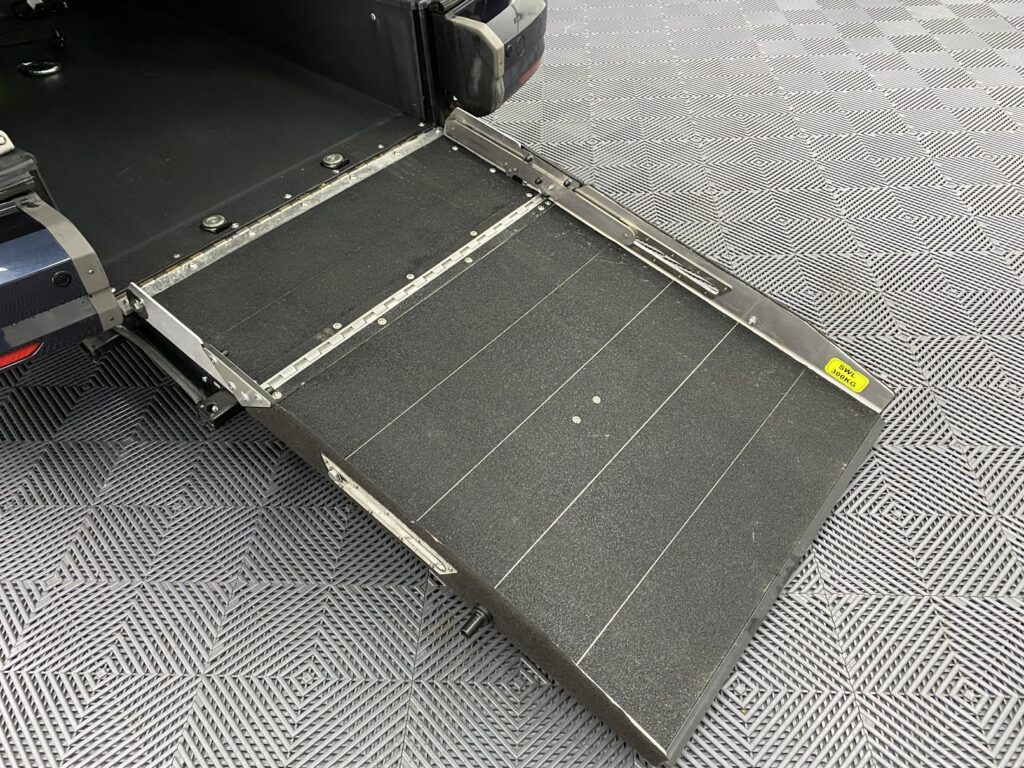
The conversion normally includes a lowered floor, rear access ramp, wheelchair restraint system and winch, together with changes to the rear seating arrangement.
Volkswagen does not manufacture the wheelchair conversion itself. The conversion is carried out by specialist companies after the base vehicle has been produced.
This means that two Caddy Maxi WAVs of a similar age can look very different once you look inside.
The floor length, ramp width, seating arrangement, restraint system and even the finish of the wheelchair area can vary between conversions.
For that reason, it is always worth looking at the actual vehicle rather than assuming that every Caddy Maxi WAV has the same specification.
The VW Caddy Maxi is available in two main wheelchair accessible configurations, each offering different balances between passenger seating and wheelchair space.
VW Caddy Maxi 4-seat WAV
The four-seat Caddy Maxi WAV is a relatively rare conversion, but it can be an excellent option for someone who needs a particularly long wheelchair area.
It has two front seats and two rear passenger seats, with the wheelchair travelling between the rear seats. Because there is no fifth seat in the centre, the lowered floor can extend much further forward into the vehicle.
The resulting wheelchair area can be similar in length to that found in some larger van-based WAVs, despite the Caddy Maxi being a considerably smaller vehicle overall.
A typical example may have measurements around:
- Wheelchair area length: approximately 200 cm up to the winch
- Ramp width: approximately 80 cm
- Entry height: approximately 147 cm
- Width between rear seats: approximately 56 cm
These measurements are a general guide only, as individual conversions can vary.
The four-seat layout can therefore be particularly useful for people using a larger electric wheelchair or certain mobility scooters, while still retaining two rear passenger seats.
The downside is simply that it is a relatively rare conversion, so you won’t find them as frequently as the five-seat version when looking through the used WAV market.
VW Caddy Maxi 5-seat WAV
The five-seat conversion is much more common and is a particularly good option for families who need to carry several passengers as well as a wheelchair.
It has two front seats and three rear passenger seats, with the wheelchair user travelling in the lowered floor area behind the rear seats.
The actual wheelchair floor length is generally no greater than you might find in some of the smaller car-based WAVs, such as a Peugeot Rifter. However, the Caddy Maxi can often give a greater feeling of space.
One reason for this is the layout. In many smaller WAVs, the wheelchair area shares the rear of the vehicle with a single rear passenger seat positioned alongside the wheelchair. This can make the available space feel more restricted, even where the measurements are reasonably similar.
With the five-seat Caddy Maxi, the three rear passenger seats are positioned across the rear of the vehicle and the wheelchair area is behind them. This gives the wheelchair user a more open, dedicated area and can make the vehicle feel considerably more spacious inside.
For families, having five usable seats plus a separate wheelchair area can therefore be a major advantage. It means you don’t necessarily have to sacrifice passenger space simply because you need to carry a wheelchair.
The five-seat Caddy Maxi is also generally easier to find than the four-seat version, so there is a much greater choice when looking at the used market.
As always, the actual measurements vary between conversions, so if you’re buying a Caddy Maxi for a particular wheelchair, it is important to check the measurements of the individual vehicle rather than relying on the model name alone.
Is a five-seat Caddy Maxi right for just two people?
One thing we sometimes point out to customers is that the five-seat Caddy Maxi isn’t necessarily the best choice if it is only being used by two people.
For example, if one person is driving and their partner is travelling in the wheelchair, the wheelchair passenger will be sitting behind the row of rear passenger seats. This means there is quite a bit of distance between the driver and the wheelchair passenger.
The rear seats can be folded down when they are not needed, but it is still worth thinking about how you will actually use the vehicle.
For some couples, particularly where the wheelchair passenger has difficulty speaking or communicating, that distance can become a real practical issue. Being able to talk easily to each other during a journey is something that can be easily overlooked when you’re concentrating on wheelchair space and passenger numbers.
If it is normally just two people travelling, a different WAV layout may therefore be more suitable, even if a five-seat Caddy Maxi initially looks like the obvious choice.
This is why we always recommend thinking about how the vehicle will actually be used, rather than simply choosing the WAV with the most seats.
Can a VW Caddy Maxi carry a mobility scooter?
It can, but the answer depends very much on the mobility scooter.
Smaller 4 mph mobility scooters are generally easier to accommodate because they tend to be shorter and narrower.
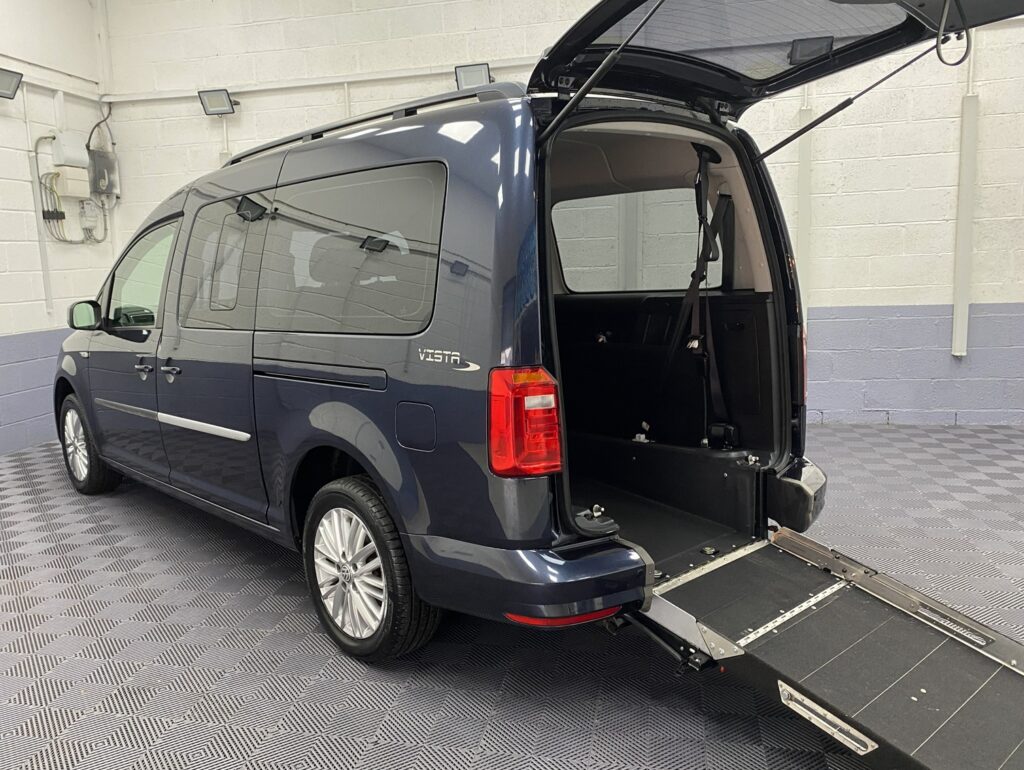
Larger 8 mph mobility scooters can be much more difficult to accommodate in a WAV because of their additional length, width and weight. This is where the four-seat Caddy Maxi conversion can be particularly useful.
Because the four-seat version doesn’t have the fifth seat in the centre, it has a much longer wheelchair floor area. This can make it a better option for carrying some of the larger 8 mph mobility scooters, which may not have enough room in a five-seat Caddy Maxi.
That doesn’t mean every 8 mph scooter will fit. The dimensions of the scooter still need to be checked against the actual vehicle, including its length, width and weight, as well as the available ramp and wheelchair area.
If you’re looking for a Caddy Maxi specifically to carry a mobility scooter, it’s a good idea to measure the scooter first and compare those measurements with the actual vehicle. If you have a larger 8 mph scooter, it is particularly worth looking for one of the four-seat conversions.
Can a Caddy Maxi carry a large electric wheelchair?
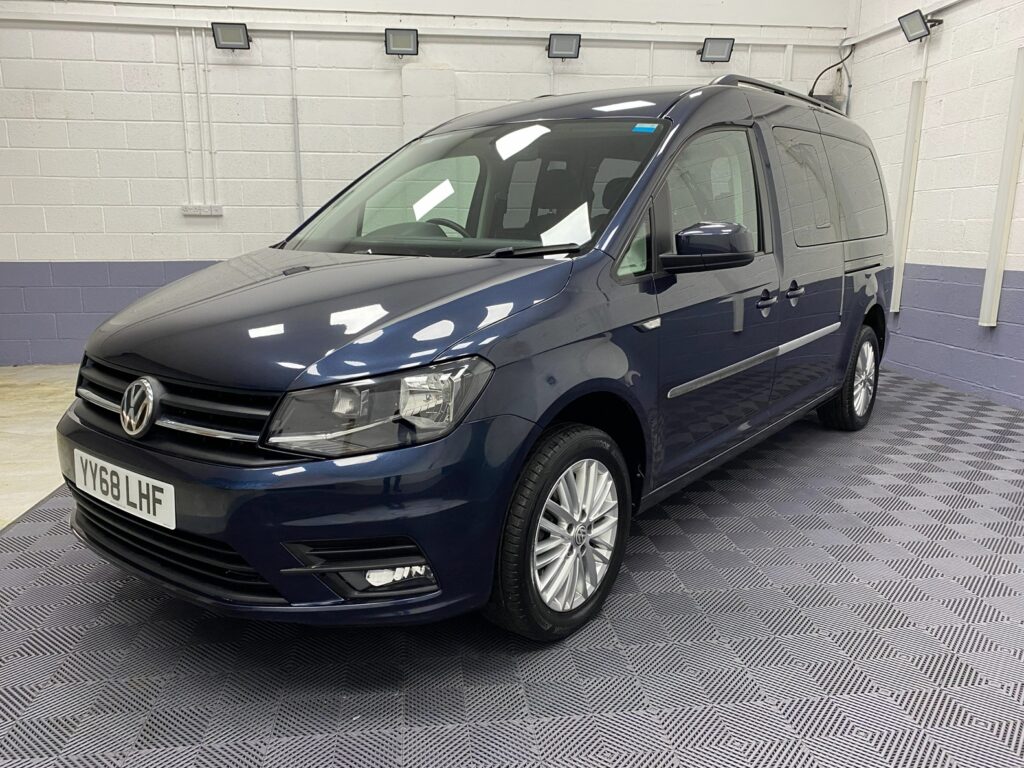
Yes, but this is one of those situations where the actual measurements of the wheelchair and the individual conversion are more important than simply choosing a Caddy Maxi.
A large electric wheelchair can vary considerably in length, width and height, and the available space in a Caddy Maxi will also depend on whether it is a four-seat or five-seat conversion and which company carried out the conversion.
The four-seat Caddy Maxi has a particularly long wheelchair area because there is no centre rear seat, so it can be an excellent option for a larger electric wheelchair where additional floor length is needed.
The five-seat version is different. Although it can give a very good feeling of space, its wheelchair floor length is not necessarily greater than that of some smaller WAVs. The advantage is more about the way the space is arranged, with the wheelchair travelling in its own open area behind the rear seats rather than sharing the rear of the vehicle alongside a passenger seat.
If you have a large electric wheelchair, measure it before choosing a WAV. You need to consider its overall length, width and height, along with the ramp width, entry height and the space available once the wheelchair is inside the vehicle.
The best WAV is not necessarily the one with the biggest vehicle body. It is the one that gives your particular wheelchair enough room to enter, travel comfortably and be safely secured.
Absolutely. I think we’ve now got the important points about the four-seat and five-seat layouts right, so the next sections should follow on naturally without repeating the same “more space” claim.
I’d do the next bits in this order:
Caddy or Caddy Maxi: what’s the difference?
The Caddy Maxi is essentially the longer version of the Volkswagen Caddy. The extra length makes a significant difference when the vehicle is converted into a WAV.
One of the main reasons people choose a Caddy Maxi is that it can offer space for the wheelchair passenger as well as up to five other people. This makes it particularly useful for families who need to carry the wheelchair user and still have plenty of passenger seating.
The standard Caddy is smaller and is generally converted to carry three people plus a wheelchair. Four-seat conversions are also available, although these are less common and generally have less wheelchair space than a four-seat Caddy Maxi.
So, if you need to carry the wheelchair user along with a number of other passengers, the Caddy Maxi gives you considerably more options.
It is also worth remembering that the different Caddy Maxi layouts can make a big difference. The five-seat Maxi gives you the ability to carry five passengers as well as the wheelchair user, while the four-seat version sacrifices one rear seat to create a particularly long wheelchair area.
That makes the choice between a Caddy and Caddy Maxi less about simply wanting a bigger vehicle and more about how many people you need to carry and how much wheelchair space you require..
VW Caddy Maxi engines
The previous-generation Caddy Maxi was available with a range of engines during its production run, with the engine choice changing as Volkswagen updated the model.
Earlier examples are commonly found with the 1.6 TDI diesel, while later Caddy Maxis were offered with the 2.0 TDI. The change came around the introduction of the newer Euro 6 engine range, which is one reason later Caddy Maxis are particularly attractive to buyers looking for a Euro 6 WAV.
The 1.4 TSI petrol was also available, although petrol Caddy Maxi WAVs are much less common on the used market.
Both manual and DSG automatic versions can be found, depending on the age and specification of the vehicle.
If you have a preference for petrol, diesel, manual or automatic, it is therefore worth checking the specification carefully when looking at Caddy Maxi WAVs, as there are quite a few different combinations available across the generation.
Who makes and converts the VW Caddy Maxi WAV?
Volkswagen supplies the Caddy Maxi as the base vehicle, with the wheelchair conversion carried out by a specialist WAV converter.
The two names you are most likely to come across in the used Caddy Maxi WAV market are Allied Vehicles, often badged as Vista, and Automotive Group.
The conversion company is worth knowing because the layout and design can vary between converters.
The Allied Vehicles conversions have a rear ramp that can be folded flat into the vehicle, creating a flat boot floor when you are not carrying a wheelchair passenger or mobility scooter, making the rear of the Caddy Maxi much more useful for ordinary luggage and shopping.
In our experience, the four-seat Caddy Maxi conversions we have come across have been converted by Automotive Group. These are particularly interesting because the four-seat layout allows the wheelchair floor to extend a long way forward, giving the Caddy Maxi its exceptionally long wheelchair area.
When looking at a used Caddy Maxi, it is therefore worth checking who carried out the conversion and which layout it has, rather than simply looking at the Volkswagen model and assuming all Caddy Maxi WAVs are the same.
What should you check when buying a used Caddy Maxi WAV?
Buying a WAV is slightly different from buying an ordinary used car because you need to consider both the base vehicle and the wheelchair conversion.
Before buying, it is worth checking:
Wheelchair dimensions
Measure the overall length, width and height of the wheelchair you use. If it is an electric wheelchair, remember to include any accessories or equipment that remain attached when travelling.
Ramp width and entry
Make sure the wheelchair will fit comfortably up the ramp and through the rear entry, and that the ramp width and entry height are suitable for the wheelchair.
Wheelchair floor length
This is particularly important if you use a larger electric wheelchair or mobility scooter. Don’t assume that two Caddy Maxi WAVs will have the same amount of usable floor space just because they are the same model.
Seating arrangement
Think about how many people you actually need to carry. The five-seat version can be particularly useful for families, while the four-seat version offers a much longer wheelchair area.
Winch and restraints
Check that the winch and wheelchair restraint system are suitable for the wheelchair or scooter and are in good working order.
Conversion condition
Look carefully at the lowered floor, ramp, restraints and surrounding trim. These are all important parts of the vehicle and shouldn’t be overlooked simply because the Volkswagen itself is in good condition.
Service history and MOT
The Caddy Maxi remains a Volkswagen underneath the conversion, so normal checks such as service history, MOT history, tyres, brakes and general mechanical condition are still important.
About Michael Harraway Cars
At Michael Harraway Cars, we specialise in quality used wheelchair accessible vehicles. I joined the motor trade in 1991 and started Michael Harraway Cars in 2005. Since then, we have sold over 500 wheelchair accessible vehicles.
With a Caddy Maxi in particular, the layout, wheelchair measurements and number of passenger seats can make a big difference. That’s why we’re always happy to talk through how you intend to use the vehicle and, where possible, check the measurements of your wheelchair or mobility scooter against the vehicle.
We’re based in St Georges, Weston-super-Mare, close to Junction 21 of the M5, making us easily accessible from Bristol, Somerset, Devon, South Wales and across the wider South West.
All viewings are by appointment, giving us the time to show you the vehicle properly and answer any questions you may have.
A WAV is a significant purchase, and the vehicle that looks best on paper isn’t necessarily the one that will work best for you. Our aim is to help you find a WAV that suits the way you actually travel.
You can view our current wheelchair accessible vehicles for sale or call us on 01934 820077 to discuss what you’re looking for.